Don’t worry! This is the same blog as before! The eagle eyed amongst regular readers will probably notice that there have been a few aesthetic changes to the blog. Basically just to give it a bit more colour and generally make it nicer to read. However, due to my artistic (i.e. awkward and indecisive) temperament there may be a few more changes going on. Normal service will be resumed shortly.
Wednesday, 10 August 2011


Tuesday, 9 August 2011
Surgical treatment for Deeply Infiltrating Endometriosis (DIE)
If you suffer from endometriosis then you may be offered surgical treatment to remove the disease. I say you may be offered surgical intervention because there are several factors that determine how likely this option will be given to you, such as; the severity of your symptoms, your fertility, your age, your response to drug treatment, what country you live in and how wealthy you are (sad, but true). If you are offered a surgical treatment, one of your main concerns is going to be, how successful will the surgery be? After all, you are placing a great deal of faith in the hands of the surgeon and you don’t want that faith to be misplaced. No surgery is to be taken lightly, so you want to know the investment you’re making with your health is going to be worth the payoff. 
In this picture you can see some blue implants as well as reddish-brown ones.
There are several different types of surgery for women with endometriosis, with varying degrees of success, which broadly fall into the two categories of conservative (e.g. excision or ablation) and radical (e.g. partial or complete remove of affected organs). I’ve spoken about the success rates of different surgeries before, but I’ve yet to discuss the success of surgery in the context of what type of endometriosis is being operated on. So, first off, a basic reminder of the different types of endometriosis. There are superficial endometriotic implants, which appear on the surface of organs like the ones in the picture below. These implants come in a variety of colours such a red, blue or black and generally the colour denotes how active the implant is.
In this picture you can see some blue implants as well as reddish-brown ones.
Picture courtesy of endometriosiszone.org
Then there are endometriotic cysts (endometrioma) which usually occur on the ovary and can range from as small as a pea to as large as a melon.
The endometrioma is the dark reddish-purple patch in the middle of the picture.
Picture courtesy of endometriosiszone.org
And there is also deeply infiltrating endometriosis (DIE) which can be one of the most difficult types to visualise and hence, operate on. The reason this type of endometriosis is so difficult to see is that the implants can be very small, up the point of being microscopic and so, invisible to the naked eye. The reason it is known as deeply infiltrating is that, unlike superficial endometriosis, DIE can ‘burrow into’ organs at depths ranging from 2mm to over 15mm and this is thought to be a significant cause of the very painful symptoms associated with endometriosis.
I’m going to focus on DIE for the rest of this post because the article I’ve come across recently is about the success of surgery for this type of endometriosis. The article in question followed 193 women with and without DIE, undergoing excisional surgery in the Päijät-Häme Central Hospital, Lahti, Finland. Women undergoing surgery for DIE were found to have significantly higher rASRM scores than those with other forms of the disease.
rASRM, to clarify, stands for the revised scoring system of the American Society of Reproductive Medicine, who devised this scheme to classify the severity of different kinds of endometriosis. It is based on several features found inside the pelvis during surgery such as type, size and location of endometriosis, as well as the presence and severity of adhesions. The scoring system then classifies the endometriosis into one of four stages; minimal, mild, moderate or severe (although it is worth noting that severity of endometriosis appears to have little bearing on severity of symptoms). In this Finnish study, women with DIE had average rASRM scores that were very close to classing them with severe endometriosis. Women without DIE had average rASRM scores that would classify them as having moderate disease.
This study also found that women with DIE had significantly more previous surgeries for endometriosis and more were indicated for surgery because of pain. With respect to the surgical procedures performed; 60% of women with DIE had surgical excision of peritoneal lesions compared to 82% of those without DIE. This could be reflecting the difficulty of removing lesions in women with DIE, or it may be that women with DIE do not have as many peritoneal lesions.
92% of women with DIE had to have adhesions cut away compared to 69% of women without DIE. This might be reflective of the fact that women with DIE have had more previous surgeries, which would increase the chances of adhesions forming. Interestingly, 32% of women with DIE had a hysterectomy of some variety, compared to only 8% of women without DIE. The reason for this could be that, because deeply infiltrating lesions can be very challenging and time consuming to remove individually (hence, increasing the likelihood of serious complications arising), surgeons may opt for complete removal of the uterus as a quicker and safer procedure.
This study also looked at the completeness of excision of endometriosis during a single operation. Women with DIE compared favourably to those without in this aspect as complete excision was reported in 95% and 97% of cases respectively. However, excision during a laparoscopic surgery for DIE was only complete in 79% in of cases compared to 95% complete removal of endometriosis in women without DIE.
The final important finding of this study was that deep lesions are frequently found outside of the ‘typical’ locations i.e. the uterus, ovaries etc. This is significant because gynaecological surgeons may be unfamiliar with operating in atypical locations, therefore a multidisciplinary approach may be required involving additional specialist surgeons.
Then there is the issue of should patients have preoperative medical therapy? On the one hand some studies suggest that medical therapy before surgery may reduce the risk of complications arising during surgery. However some eminent specialists in endometriosis surgery forgo the use of drugs that may suppress endometriosis due to the fact that they may make the endometriotic implants harder to see whilst operating. If you are due to have surgical treatment for endometriosis anytime soon, these are issues you should raise with your surgeon. It is also important to remember that, if you do have deeply infiltrating endometriosis and are due for surgical excision, it is in your best interest to have a surgeon who is well experienced in this type of procedure and familiar with the problems this type of endometriosis can present.
Whilst we must always remember that one, relatively small, study such as this does not set the standard for all surgeries for DIE, it does give us a good example of what can be expected, the problems faced by patients and surgeons, and perhaps ways in which we can improve the surgical treatment of endometriosis.
Friday, 22 July 2011
The Facts about Endometriosis
I remember way back when I first started studying endometriosis, it must have been around seven years ago when I properly got into it. When it comes to studying a subject, seven years isn’t very long, but I already had a bit of a head start in understanding endometriosis because I grew up with a mother who had endometriosis, so I got to see the effects of the disease first hand. That said, even with a fair degree of background knowledge, there was still a lot I didn’t know about the disease and trying to find information about endometriosis was quite difficult as there were very few studies that explored how the disease affected women. There have been a few small scale studies in the meantime that have addressed the issue and given us some of the common statistics we hear about endometriosis (like average diagnostic delay, average age of suffer etc etc. But these studies have tended only to focus on a single country or population which limits their scope.
In order to address this issue the Global Study of Women’s Health (GWSH) have recently completed a study looking at the effect of endometriosis on 1,418 women in 16 different countries around the world. One of the key findings of this study I have mentioned before in a previous post, but more data has been released, which highlights some other important information about endometriosis that everyone should know. I’ll go through what else has been found so far and give a little comment on each finding:
• “Women with endometriosis experienced an average delay of 7 years from symptom onset until they were finally diagnosed and treated”
The delay in diagnosis is one of the points that needs addressing most urgently in women with endometriosis. I’ve heard other statistics that say the average time to diagnosis is around 7-9 years and frankly this is totally unacceptable. In my humble opinion, the best way to shorten these diagnostic delays is to get more education about endometriosis to young girls and medical professionals.
• “Two-thirds of women sought medical help for their symptoms before the age of 30 (one-fifth below the age of 19)”
It’s interesting to know when women are seeking help for their symptoms. I know a lot of women get put off seeking help because they continually get unhelpful medical advice, which is another reason why better education about endometriosis is needed.
• “65% of women with endometriosis presented with pain, and one-third of these women were also infertile”
Nothing massively surprising with this finding. However this is exactly the sort of information that, although it seems obvious to you and me, needs to be shoved in the faces of those with enough power and money to do something about it.
• “Infertility alone, without pain, was reported in 14% of women with endometriosis and 29% of those who did not have endometriosis”
When I looked at this, at first I thought it was saying women with endometriosis had less infertility than those without. Looking at it though, it’s saying women with endometriosis experience more pain with infertility than those without endometriosis. OK, that may have been obvious to you, but it had me scratching my head for a minute.
• “The severity of endometriosis (r-AFS disease stage) did not reflect the severity of a woman’s symptoms”
This is another finding that definitely needs to be reiterated to everyone everywhere. It is an important piece of information because it seems to counterintuitive. Anyone who was new to endometriosis may think that minimal disease equals minimal symptoms, but endometriosis is not a simple, logical disease. That is why studies like these, which turn assumptions on their head, need to be done.
• “Women with endometriosis suffer a 38% greater loss of work productivity than those without endometriosis – this difference was mainly explained by a greater severity of pain symptoms among women with endometriosis”
• “Reduced effectiveness at work accounts for more loss of work productivity than time missed from work”
• “Non-work related activities, such as housework, exercising, studying, shopping and childcare were also significantly impaired by the painful symptoms of endometriosis”
These all seem pretty obvious. But anyone reading this probably has the power of hindsight. When I first started out researching endometriosis this is exactly the sort of information I needed to know and is exactly the sort of information politicians, policy makers and anyone ignorant to the plight of endometriosis sufferers need.
• “The pain symptoms of endometriosis reduce quality of life, with the impact being mainly on physical, rather than mental, health. As symptoms become more severe, quality of life is further reduced”
Well, Duh. But in all seriousness, studies like this are great for highlighting the problems faced by women with endometriosis and the more awareness we have the more support we can get.
In order to address this issue the Global Study of Women’s Health (GWSH) have recently completed a study looking at the effect of endometriosis on 1,418 women in 16 different countries around the world. One of the key findings of this study I have mentioned before in a previous post, but more data has been released, which highlights some other important information about endometriosis that everyone should know. I’ll go through what else has been found so far and give a little comment on each finding:
• “Women with endometriosis experienced an average delay of 7 years from symptom onset until they were finally diagnosed and treated”
The delay in diagnosis is one of the points that needs addressing most urgently in women with endometriosis. I’ve heard other statistics that say the average time to diagnosis is around 7-9 years and frankly this is totally unacceptable. In my humble opinion, the best way to shorten these diagnostic delays is to get more education about endometriosis to young girls and medical professionals.
• “Two-thirds of women sought medical help for their symptoms before the age of 30 (one-fifth below the age of 19)”
It’s interesting to know when women are seeking help for their symptoms. I know a lot of women get put off seeking help because they continually get unhelpful medical advice, which is another reason why better education about endometriosis is needed.
• “65% of women with endometriosis presented with pain, and one-third of these women were also infertile”
Nothing massively surprising with this finding. However this is exactly the sort of information that, although it seems obvious to you and me, needs to be shoved in the faces of those with enough power and money to do something about it.
• “Infertility alone, without pain, was reported in 14% of women with endometriosis and 29% of those who did not have endometriosis”
When I looked at this, at first I thought it was saying women with endometriosis had less infertility than those without. Looking at it though, it’s saying women with endometriosis experience more pain with infertility than those without endometriosis. OK, that may have been obvious to you, but it had me scratching my head for a minute.
• “The severity of endometriosis (r-AFS disease stage) did not reflect the severity of a woman’s symptoms”
This is another finding that definitely needs to be reiterated to everyone everywhere. It is an important piece of information because it seems to counterintuitive. Anyone who was new to endometriosis may think that minimal disease equals minimal symptoms, but endometriosis is not a simple, logical disease. That is why studies like these, which turn assumptions on their head, need to be done.
• “Women with endometriosis suffer a 38% greater loss of work productivity than those without endometriosis – this difference was mainly explained by a greater severity of pain symptoms among women with endometriosis”
• “Reduced effectiveness at work accounts for more loss of work productivity than time missed from work”
• “Non-work related activities, such as housework, exercising, studying, shopping and childcare were also significantly impaired by the painful symptoms of endometriosis”
These all seem pretty obvious. But anyone reading this probably has the power of hindsight. When I first started out researching endometriosis this is exactly the sort of information I needed to know and is exactly the sort of information politicians, policy makers and anyone ignorant to the plight of endometriosis sufferers need.
• “The pain symptoms of endometriosis reduce quality of life, with the impact being mainly on physical, rather than mental, health. As symptoms become more severe, quality of life is further reduced”
Well, Duh. But in all seriousness, studies like this are great for highlighting the problems faced by women with endometriosis and the more awareness we have the more support we can get.
Tuesday, 21 June 2011
Trendy
There’s quite a lot of research going on into endometriosis; no really there is. Although there are a few reasons why you may not have heard about it. Firstly, this research isn’t well publicised outside of the scientific community (and to be honest, it isn’t well publicised inside the scientific community either). Secondly, the research isn’t made widely accessible to the public. Most scientific literature on endometriosis gives us accurate information about the disease, but is presented in such a way that, unless you’ve got a hell of a lot of letters after your name, may as well be written in Sanskrit. It’s the whole aim of this blog to try and get the more interesting research stories out there for people to read and, unlike certain media outlets, try to report it truthfully. Whilst I try to cover interesting stories, I haven’t really covered the amount of research that is going on the trends in said research. So this post is an attempt to rectify that.
To start off we should look at how much research has been going on to date; a good way to judge that is by looking at the number of scientific journal articles that have been published on endometriosis over the last 60 years. Figure 1 below shows the number of scientific articles published on endometriosis since the 1950’s, and as you can see, there has been a surge in endometriosis research in recent times. To put it into context, there have been more articles published on endometriosis since the year 2000 than there were articles published in all the years preceding 2000.
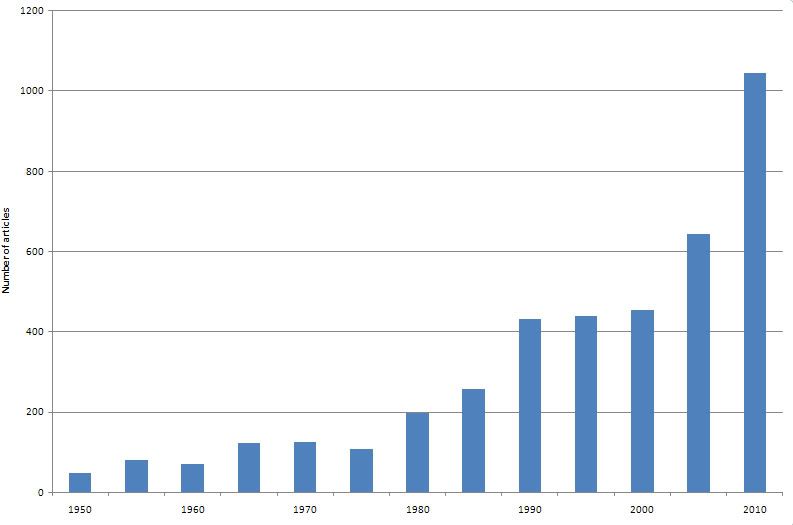
Figure 1. Number of scientific articles published on endometriosis since 1950 (click image for full size)
So we appear to be living in a kind of ‘golden age’ of endometriosis research at the moment. Unfortunately though, whilst this has led to a better understanding of how the disease works, it hasn’t really translated to any dramatic improvements in the level of treatment for the disease, yet.
So what are the main subject areas being focussed on at the moment? Figures 2a and 2b show what subject matters are most common in the field of endometriosis research.
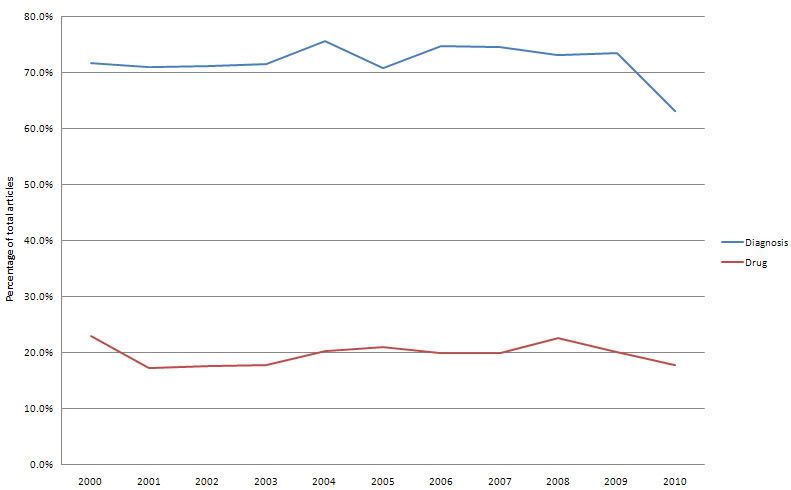
Figure 2a. Trends in endometriosis research (click image for full size)
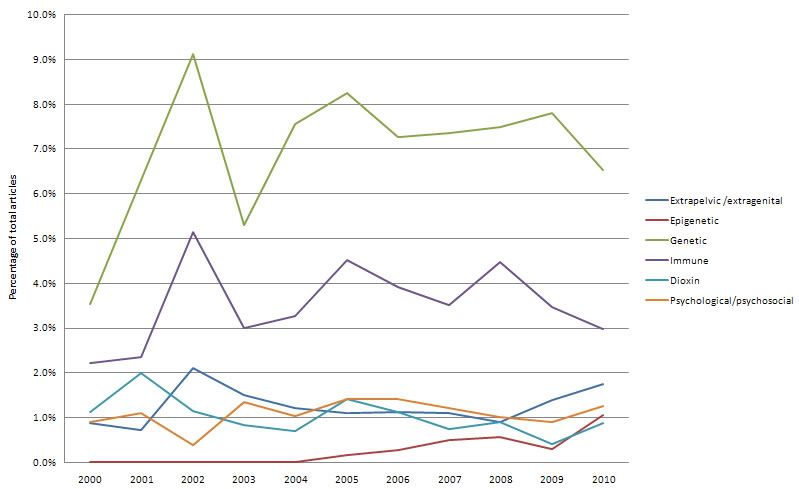
Figure 2b. Trends in endometriosis research (click image for full size)
As we can see from Figure 2a the number of papers published with the keywords ‘diagnosis’ or ‘drug’ remained fairly constant with a dip around 2010. We’ll have to wait until the end of 2011 to see whether interest in these areas goes up again. It could be the reason for this dip in these areas is tied into the current global financial crisis. Drug research in particular is a very costly undertaking (it can cost nearly $1billion just to take one drug from concept to pharmacy shelf); these days drug companies are unlikely to be forthcoming with the hundreds of millions of dollars necessary for research into drug treatments for endometriosis. That said, articles with the keyword ‘diagnosis’ still dominate the research landscape comprising around 70% of all papers published on endometriosis. This reflects the desperate need for better diagnostic methods for endometriosis which, given the large amount of interest in the subject, will hopefully yield some results soon.
There has also been a steadily increasing level of interest in genetic and immune system research into endometriosis. With the completion of the human genome project at the turn of millennium, looking into what genetic differences make us more or less susceptible to certain diseases has become steadily easier and cheaper, so there’s no surprises there. What is quite interesting is the emergence of epigenetic research into endometriosis around 2005. Epigenetics is a relatively new field of science, only really being properly investigated from around 20 years ago. The difference between genetics and epigenetic is that, whereas genetics is concerned with the changes in the code of DNA, epigenetics is concerned with changes in the bits that are attached to the DNA. These epigenetic marks control which genes are turned ‘on’ or ‘off’ in your body and are therefore essential in maintaining correct bodily function. Several studies have shown that a number of the epigenetic marks are altered in endometriosis and this may provide some interesting answers to some of the more puzzling aspects of the disease.
So, the final thing to consider is where this research is coming from. Unfortunately, there is no easy way to know exactly as the current search engines for scientific literature don’t let you search by the location of where the research was done. I could go through the 17,000 individual articles on endometriosis and note down where the research centres were, but I don’t think I’ll live that long. What the current search engines do allow you to do is search by where the articles were published. The trouble is, where a piece of research was carried out and where it was published could be two completely different places. I could write an article here in England and get it published in an American journal and the search results would show that the article was American. Nevertheless this information does provide some interesting insights into where the major centres of endometriosis publication are (see Figure 3 below).
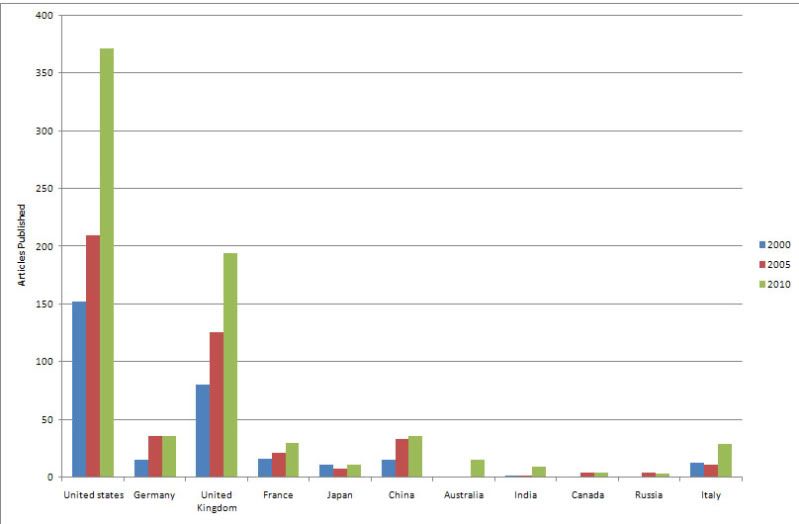
Figure 3. Articles published on endometriosis by country of publication (click image for full size)
Unsurprisingly the majority of endometriosis research is published in America and the UK; this is most likely due to the fact that if you want to get your research to a wider audience, English is the most widely spoken language in the world, so it’s better to have it published in an English language journal. The most important thing to see in this data though, is that all the bars point upwards over time, meaning more research into endometriosis. To emphasise my point, let’s look at the last 100 articles on endometriosis (between 13th June and 18th April 2011) by the country in which the research was actually done. Figure 4 below shows that there is a huge diversity of countries in which endometriosis research is being carried out, just within the last few months.
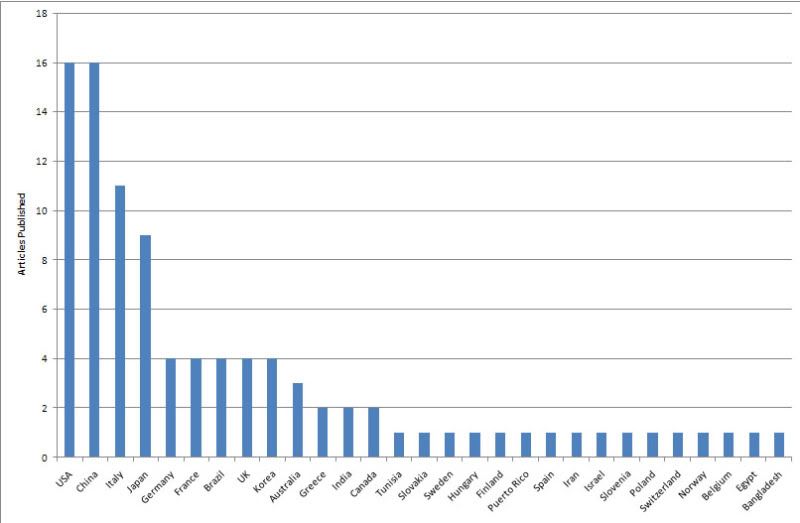
Figure 4. Articles published on endometriosis by country of research (click on image for full size)
Unsurprisingly, we can see that the most research is coming out of the superpower countries like the USA and China. Whilst Figure 4 only shows the results from 100 articles it still tells us that endometriosis is being addressed as a global problem and that the world is standing up and taking notice.
But we don’t need to only consider the scientific literature published on endometriosis. There is a handy little feature of Google Books called the Ngram viewer that lets us look at the number of books published on endometriosis over the last 100 years of so. If we look at Figure 5a and 5b we can see that during the period after 1960 the number of books concerning endometriosis really started to flourish. Sadly though the amount of books published in American English has taken a downturn (Fig.5a). On a positive note though, books in British English have continued to increase at a fairly constant rate (Fig.5b) and fortunately, for the most part, you don’t need to translate between the two English forms.
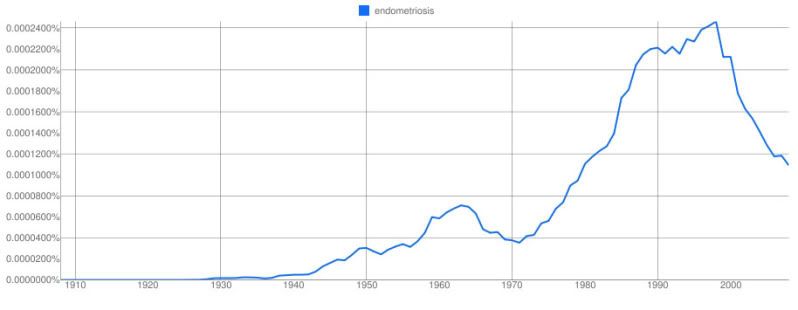
Figure 5a. Books published on endometriosis in American English (click image for full size)
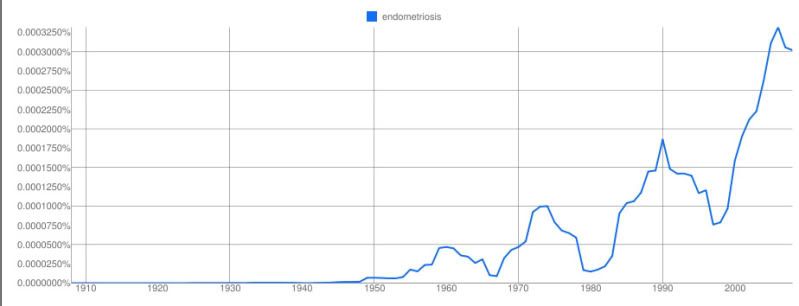
Figure 5b. Books published on endometriosis in British English (click image for full size)
Sometimes it can feel like the world is ignoring those who suffer with endometriosis, but that really is not the case, as I hope I’ve shown here. I wouldn’t go as far to say that the behemoth of scientific research has its attention fully on the subject of endometriosis, but the great beast definitely has one of its eyes cast over endometriosis and is slowly realising its importance. If the current trends that we have explored here continue then the future for endometriosis sufferers doesn’t look so bleak. That’s an important notion to bear in mind, when your daily life consists of so much suffering, you must believe that it will get better, I certainly do.
To start off we should look at how much research has been going on to date; a good way to judge that is by looking at the number of scientific journal articles that have been published on endometriosis over the last 60 years. Figure 1 below shows the number of scientific articles published on endometriosis since the 1950’s, and as you can see, there has been a surge in endometriosis research in recent times. To put it into context, there have been more articles published on endometriosis since the year 2000 than there were articles published in all the years preceding 2000.

Figure 1. Number of scientific articles published on endometriosis since 1950 (click image for full size)
So we appear to be living in a kind of ‘golden age’ of endometriosis research at the moment. Unfortunately though, whilst this has led to a better understanding of how the disease works, it hasn’t really translated to any dramatic improvements in the level of treatment for the disease, yet.
So what are the main subject areas being focussed on at the moment? Figures 2a and 2b show what subject matters are most common in the field of endometriosis research.

Figure 2a. Trends in endometriosis research (click image for full size)

Figure 2b. Trends in endometriosis research (click image for full size)
As we can see from Figure 2a the number of papers published with the keywords ‘diagnosis’ or ‘drug’ remained fairly constant with a dip around 2010. We’ll have to wait until the end of 2011 to see whether interest in these areas goes up again. It could be the reason for this dip in these areas is tied into the current global financial crisis. Drug research in particular is a very costly undertaking (it can cost nearly $1billion just to take one drug from concept to pharmacy shelf); these days drug companies are unlikely to be forthcoming with the hundreds of millions of dollars necessary for research into drug treatments for endometriosis. That said, articles with the keyword ‘diagnosis’ still dominate the research landscape comprising around 70% of all papers published on endometriosis. This reflects the desperate need for better diagnostic methods for endometriosis which, given the large amount of interest in the subject, will hopefully yield some results soon.
There has also been a steadily increasing level of interest in genetic and immune system research into endometriosis. With the completion of the human genome project at the turn of millennium, looking into what genetic differences make us more or less susceptible to certain diseases has become steadily easier and cheaper, so there’s no surprises there. What is quite interesting is the emergence of epigenetic research into endometriosis around 2005. Epigenetics is a relatively new field of science, only really being properly investigated from around 20 years ago. The difference between genetics and epigenetic is that, whereas genetics is concerned with the changes in the code of DNA, epigenetics is concerned with changes in the bits that are attached to the DNA. These epigenetic marks control which genes are turned ‘on’ or ‘off’ in your body and are therefore essential in maintaining correct bodily function. Several studies have shown that a number of the epigenetic marks are altered in endometriosis and this may provide some interesting answers to some of the more puzzling aspects of the disease.
So, the final thing to consider is where this research is coming from. Unfortunately, there is no easy way to know exactly as the current search engines for scientific literature don’t let you search by the location of where the research was done. I could go through the 17,000 individual articles on endometriosis and note down where the research centres were, but I don’t think I’ll live that long. What the current search engines do allow you to do is search by where the articles were published. The trouble is, where a piece of research was carried out and where it was published could be two completely different places. I could write an article here in England and get it published in an American journal and the search results would show that the article was American. Nevertheless this information does provide some interesting insights into where the major centres of endometriosis publication are (see Figure 3 below).

Figure 3. Articles published on endometriosis by country of publication (click image for full size)
Unsurprisingly the majority of endometriosis research is published in America and the UK; this is most likely due to the fact that if you want to get your research to a wider audience, English is the most widely spoken language in the world, so it’s better to have it published in an English language journal. The most important thing to see in this data though, is that all the bars point upwards over time, meaning more research into endometriosis. To emphasise my point, let’s look at the last 100 articles on endometriosis (between 13th June and 18th April 2011) by the country in which the research was actually done. Figure 4 below shows that there is a huge diversity of countries in which endometriosis research is being carried out, just within the last few months.

Figure 4. Articles published on endometriosis by country of research (click on image for full size)
Unsurprisingly, we can see that the most research is coming out of the superpower countries like the USA and China. Whilst Figure 4 only shows the results from 100 articles it still tells us that endometriosis is being addressed as a global problem and that the world is standing up and taking notice.
But we don’t need to only consider the scientific literature published on endometriosis. There is a handy little feature of Google Books called the Ngram viewer that lets us look at the number of books published on endometriosis over the last 100 years of so. If we look at Figure 5a and 5b we can see that during the period after 1960 the number of books concerning endometriosis really started to flourish. Sadly though the amount of books published in American English has taken a downturn (Fig.5a). On a positive note though, books in British English have continued to increase at a fairly constant rate (Fig.5b) and fortunately, for the most part, you don’t need to translate between the two English forms.

Figure 5a. Books published on endometriosis in American English (click image for full size)

Figure 5b. Books published on endometriosis in British English (click image for full size)
Sometimes it can feel like the world is ignoring those who suffer with endometriosis, but that really is not the case, as I hope I’ve shown here. I wouldn’t go as far to say that the behemoth of scientific research has its attention fully on the subject of endometriosis, but the great beast definitely has one of its eyes cast over endometriosis and is slowly realising its importance. If the current trends that we have explored here continue then the future for endometriosis sufferers doesn’t look so bleak. That’s an important notion to bear in mind, when your daily life consists of so much suffering, you must believe that it will get better, I certainly do.
Saturday, 11 June 2011
Endometriosis and Age at Menopause
Menstruation, there’s good and bad things about it. Any post-menarcheal woman reading this will be more than familiar with the ‘bad things’ which include: pain, irritability, bloating, pain, nausea, headaches, tiredness, pain, bleeding, generally feeling shit, I could go on. So I bet you’re wondering where I’m going to pull the ‘good things’ associated with menstruation from. Well one thing I’ve noticed over the years is that the mere mention of menstruation is enough to halt any conversation dead in its tracks; and that can come in handy sometimes.
Seriously, give it a try, next time you’re at wedding or other such family gathering and get stuck talking to some boring relative just drop in a quick description of your last period and everyone within earshot will try to climb inside their own shoes, leaving you to enjoy the buffet in peace. Done something wrong at work and got called into the boss’s office? Start off the conversation by recounting a memorable menstrual episode and I guarantee you’ll be out of there scot free within five seconds. Pulled over for speeding? Tell the office on duty about how many tampons you get through a month and he’ll tear up your ticket there and then*. But there comes a time in woman’s life where menstruation stops, and that time is menopause.
*ok that last one may not work
Menopause, for those that don’t know, signals the end of a woman’s menstrual cycles. In the western world menopause occurs, on average, around the age of 52 and is usually a gradual process that takes place over months or even years. If you’re a lady and you’d like to know approximately when you’ll go through the menopause, a good indication is your mother’s age when she went through menopause. The reason that a woman’s menstrual cycles stop is that, as a woman gets older, her body’s hormone levels change, this means that the levels of oestrogen in her body will gradually decrease and the production of mature eggs (ovulation) will eventually stop and so menstruation becomes unnecessary.
This change in body hormone levels doesn’t come without consequences though. You’ve probably heard of some of the common symptoms of menopause such as hot flushes and mood changes and this is all tied in to the body adjusting to the new hormonal balance.
There are a number of factors that affect the age at which a woman goes through menopause. I’ve mentioned above that one of the major influences is her mother’s age at menopause, However, factors that may increase the age at menopause include: Having more than three children, being of high socioeconomic status, and having a high BMI. Factors that can decrease the age at menopause include: smoking and low BMI.
Why am I talking about menopause though? Well there was a study published recently that showed women who have a history of endometriosis are likely to have an earlier menopause. The study itself was quite thorough in its methods, they looked at surveys of 49,927 female, Japanese nurses between 2001 and 2007. In this population the average age at menopause was 49.5, that decreased to 48.8 for endometriosis sufferers. Why might this be the case? The authors of the paper suggest that surgical and medical treatments associated with endometriosis may contribute. For example, surgery involving the ovary, such as excision of removal, was found to decrease the age at menopause. The role of medical treatments was harder to judge as there are conflicting reports as to the effect of certain drugs on menopause. Certain studies on oral contraceptives, for example, show they increase the age at menopause, whereas other studies show they have no effect at all, so the jury’s still out on that.
Tuesday, 7 June 2011
Endometriosis mimicked by office printers, yes you read that right
You come across a lot of strange things in this world, mostly on reality TV shows, but occasionally a piece of academic literature will make you scratch your head and think “really?” There’s a whole blog dedicated to these type of research, they have examples such as; using Rastafarians to cure arachnophobia, and studying how your general income affects your propensity to eat coins. I’ll not dwell on my simmering rage at the fact that there seems to be an endless pot of gold to fund research into pointless subjects, yet if you want to do serious research into a chronic condition like endometriosis, you have to beg for scraps, no I’ll not dwell on that.
What I’m trying to get at is that occasionally, the apparently drab world of scientific investigation can throw something interesting into the mix. This leads me onto one of my latest finds. This was a paper entitled “Submesothelial deposition of carbon nanoparticles after toner exposition: case report”, which struck me as rather odd considering it came up in a search for papers on endometriosis. By all accounts it’s not a jokey paper like the ones mentioned above, but a serious investigation into the effect of exposure to carbon nanoparticles given off by office printers on people’s health.
One case in particular is interesting, the case of a woman who underwent laparoscopic surgery with suspected endometriosis. The surgeons found black deposits in her peritoneum (pelvic cavity), which is pretty indicative of endometriosis. However, the surgeons took a sample of one of these supposed endometriotic implants and examined it more closely under a powerful microscope. What they found, to their surprise, was that the black deposits, which looked like endometriosis to the naked eye, were clumps of carbon nanoparticles (basically the tiny particles given off by printer toner cartridges. To give to an idea how tiny, the largest particles were 60nm in diameter, that’s the size you would get if you took a ruler, measured out 1mm then divided that into a thousand pieces, then took one of those pieces and divided it into seventeen pieces, each one of the remaining pieces would be around 60nm) and not endometriosis at all. Quite odd I think you’ll agree.
So how did printer toner dust end up in this woman’s pelvic cavity? The lady in question was working in an office with eight printers in close proximity, in addition to this she was using a laser printer herself pretty much constantly meaning there was ample time to breathe in lots of toner particles. The authors speculate that the carbon dust particles entered her body through the lungs and, because they were so small, were able to pass through the lining of the lungs into the blood and lymph vessels. From there they travelled around the body and for some reason deposited in the pelvic cavity.
As far as I know this is the only such report on record of carbon nanoparticles mimicking endometriosis, and on closer inspection it’s pretty easy to tell the two apart. Still, it’s quite an unusual finding.
What I’m trying to get at is that occasionally, the apparently drab world of scientific investigation can throw something interesting into the mix. This leads me onto one of my latest finds. This was a paper entitled “Submesothelial deposition of carbon nanoparticles after toner exposition: case report”, which struck me as rather odd considering it came up in a search for papers on endometriosis. By all accounts it’s not a jokey paper like the ones mentioned above, but a serious investigation into the effect of exposure to carbon nanoparticles given off by office printers on people’s health.
One case in particular is interesting, the case of a woman who underwent laparoscopic surgery with suspected endometriosis. The surgeons found black deposits in her peritoneum (pelvic cavity), which is pretty indicative of endometriosis. However, the surgeons took a sample of one of these supposed endometriotic implants and examined it more closely under a powerful microscope. What they found, to their surprise, was that the black deposits, which looked like endometriosis to the naked eye, were clumps of carbon nanoparticles (basically the tiny particles given off by printer toner cartridges. To give to an idea how tiny, the largest particles were 60nm in diameter, that’s the size you would get if you took a ruler, measured out 1mm then divided that into a thousand pieces, then took one of those pieces and divided it into seventeen pieces, each one of the remaining pieces would be around 60nm) and not endometriosis at all. Quite odd I think you’ll agree.
So how did printer toner dust end up in this woman’s pelvic cavity? The lady in question was working in an office with eight printers in close proximity, in addition to this she was using a laser printer herself pretty much constantly meaning there was ample time to breathe in lots of toner particles. The authors speculate that the carbon dust particles entered her body through the lungs and, because they were so small, were able to pass through the lining of the lungs into the blood and lymph vessels. From there they travelled around the body and for some reason deposited in the pelvic cavity.
As far as I know this is the only such report on record of carbon nanoparticles mimicking endometriosis, and on closer inspection it’s pretty easy to tell the two apart. Still, it’s quite an unusual finding.
Tuesday, 10 May 2011
Too old for this
Just a quick post this time, I found a report of two unusual presentations of ovarian endometriosis. One case was a woman of 57 and the other a woman of 80, which is the oldest woman with endometriosis I’ve heard of (although I’m willing to be corrected). Both cases are in post menopausal women, which in itself it pretty unusual in itself. The reason for this is that during menopause the ovaries start shutting down and stop producing estrogen. This isn’t so good when you consider the side effects - like hot flashes, mood swings, bone density loss etc – however, if you have endometriosis then lack of estrogen is generally considered a positive as estrogen is thought to be the ‘fuel’ of endometriosis. In case of point, a 15 year follow up study of 130 women with endometriosis from Norway found that 96.9% of them were pain free after menopause.
Considering that, it’s pretty obvious why most of the medical therapy for endometriosis is focussed on reducing estrogen within the body. However, if a woman’s menopause symptoms are particularly severe she may be offered hormone replacement therapy (HRT). This isn’t such a good thing if she has also had endometriosis as HRT basically puts estrogen back into the body, which may lead to resurgence of endometriosis. Of course, as most women with endometriosis don’t continue to have symptoms after menopause, it’s not a massive risk, but it is a risk and doctors need to be aware of this. Postmenopausal endometriosis can also be associated with some serious complications; the 80 year old woman mentioned above also developed a malignant endometrioid carcinoma; other complications which have been reported include: kidney failure associated with postmenopausal deeply infiltrating endometriosis, bowel obstruction, liver damage and a general increase in risk of malignant transformation of ovarian endometriosis (although solid evidence of the latter is lacking).
Therefore, it is important for all women who have gone through the menopause (either naturally or through surgery) and have endometriosis to be aware of any recurrence of symptoms, especially if they are also undergoing HRT.
Considering that, it’s pretty obvious why most of the medical therapy for endometriosis is focussed on reducing estrogen within the body. However, if a woman’s menopause symptoms are particularly severe she may be offered hormone replacement therapy (HRT). This isn’t such a good thing if she has also had endometriosis as HRT basically puts estrogen back into the body, which may lead to resurgence of endometriosis. Of course, as most women with endometriosis don’t continue to have symptoms after menopause, it’s not a massive risk, but it is a risk and doctors need to be aware of this. Postmenopausal endometriosis can also be associated with some serious complications; the 80 year old woman mentioned above also developed a malignant endometrioid carcinoma; other complications which have been reported include: kidney failure associated with postmenopausal deeply infiltrating endometriosis, bowel obstruction, liver damage and a general increase in risk of malignant transformation of ovarian endometriosis (although solid evidence of the latter is lacking).
Therefore, it is important for all women who have gone through the menopause (either naturally or through surgery) and have endometriosis to be aware of any recurrence of symptoms, especially if they are also undergoing HRT.
Subscribe to:
Posts (Atom)