Pages

Monday, 22 February 2016

The Rhythm is Gonna Get You

Are you a morning person, no? Me neither. We all tend to have a rhythm to our days that we prefer; some of us prefer to go to bed at 9pm, some us at 2am. Your preference for patterns of waking and sleeping actually has a biological basis called the circadian clock. This is, essentially, your body’s internal clock (which is essentially the timed switching on and off of certain genes) and allows your body to anticipate events that happen repeatedly every day and produce the correct physiological response (like feeling sleepy or awake at certain times).   Our circadian clocks are controlled by a small part of the brain called the suprachiasmatic nucleus (SCN) located within the hypothalamus. The SCN is responsible for coordinating rhythms in the hypothalamus and the pituitary gland which in turn form part of the hypothalamatic-pituitary-gonadal (HPG) axis. This HPG axis is important for driving the rhythms of several organs in your body, but most importantly for the subject of this week’s blog post, it orchestrates the rhythms in the reproductive organs.


In women the regulation and rhythm of the menstrual cycle is a tightly controlled systems involving the HPG axis. Below is a diagram that summarises how the components all work together.

Interestingly several organs in the human body have their own distinct clock (called a peripheral clock) that are linked to the clock in the brain (the central clock). One such peripheral clock is in the ovaries. The ovaries, in concert with the brain, control the monthly variation in hormonal levels and the menstrual cycle. However, not only do levels of hormones change over the month, but also over the course of a day. A good example of this is that the monthly LH surge, mentioned above, requires a certain signal at the end of a resting period, which is why 80% of women have their LH surge around 8 a.m.  However, it is not fully understood (in humans at least) how the monthly and daily variations in hormone levels are regulated.

Altering the pattern of exposure to light, food and sleep can disrupt the body’s clock which can have negative effects ranging from feeling sluggish to serious illnesses (in the case of long term disruption). Disturbances in the normal cycle of waking/sleeping/eating etc have been suggested to cause alterations in hormone levels. Indeed some studies have shown that even partial sleep deprivation can lead to temporary increases in estrogen and luteinizing hormone, as well as altering the production of several other hormones. Another study showed that women with certain mutations in a gene that is turned on in an area of the brain that controls circadian rhythms leads to those women experiencing more miscarriages and less pregnancies than those women without the mutation. So clearly there is an important link between cycles in the brain and the reproductive system and disrupting one can adversely affect the other.

As modern society creates the necessity for longer and more varied working hours it is inevitable that some people will work at times that are out of synch with the ‘normal’ waking/sleeping rhythms we are used to. Disruption of the normal patterns of sleep because of shift working has been suggested to increase the risk of conditions such as cardiovascular disorders, gastrointestinal disorders, cancer and mental health conditions. So clearly there are negative health effects associated with shift work.

Of particular interest then are studies that have suggested that night shift work can increase the risk of having endometriosis, in some cases by as much as 50%. This same study found that there were no associations between endometriosis and mutations involving genes that regulate circadian rhythms, which leads me to believe the increase in risk was due to changes in hormones as a direct result of shift work. Now before I go any further there is a question I would like you to consider. Does night shift work actually increase the risk of developing endometriosis, or does night shift work increase the severity of endometriosis related symptoms making it more likely to be diagnosed? I very much doubt that night shift work can actually cause endometriosis, but it is certainly feasible that disruption of hormonal cycles by shift working could worsen the symptoms.

Indeed some studies have shown that, while levels of FSH and LH are not affected by night shift work, levels of estrogen are significantly increased, possibly due to a lengthening of the follicular phase of the menstrual cycle. Additionally melatonin, a hormone whose production is greatly affected by light/dark cycles but also has anti-estrogenic effects, has been shown to be reduced in shift workers. Perhaps as a result of this further studies demonstrated that shift work can cause alterations to menstrual cycle length and regularity.

Is there any way we can tie these effects to the symptoms of endometriosis? We know that when it comes to endometriosis, heightened levels of estrogen are bad. Pretty much all medical therapies for endo are based on reducing estrogen levels. Estrogen leads to increased growth and inflammatory action of endometriotic lesions.  Estrogen also increases the production of enzymes that produce chemical messengers called prostaglandins. Prostaglandins have several different functions, but in the uterus, they control the contractions of the uterine muscle, which are more commonly known as menstrual cramps. Excessive prostaglandin production can lead to severe and debilitating menstrual cramps (dysmenorrhoea) which is the most common symptom experienced by women with endometriosis.Therefore it could be that increased estrogen levels as a result of shift work could increase the severity of endometriosis associated dysmenorrhea.

I mentioned melatonin before as well and that was no mistake. There has been a lot of interest recently in melatonin as a treatment for endometriosis associated pain. Whilst most of the studies have only been lab based so far, some clinical trial data suggests that melatonin therapy could reduce the chronic pain associated with endometriosis as well as improve sleep quality.

In some ways the symptoms of endometriosis may be forming a vicious cycle. Some studies have shown that a substantial proportion of women with endo (of the cul-de-sac in the case of this study) experience sleep disturbances, insomnia and daytime fatigue. 
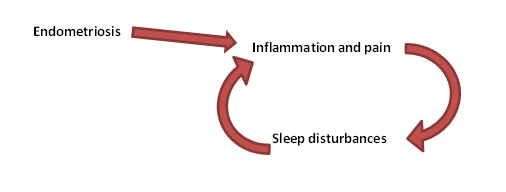
This goes a way to show how treating endometriosis should be viewed from many different angles to achieve maximum effectiveness. At present most medical therapies for endo are focussed on one particular aspect of the disease. A broader view of the disease and all of its strengths and weaknesses are needed before sufferers really see some benefit. 

Thursday, 11 February 2016

Report from Juneau Biosciences

Way back in the distant and hazy past of 2009 I wrote about a company called Juneau Biosciences who were looking to recruit women with endometriosis for genetic research study. Well the results are in and they have released a preliminary report on what they have found.

The report states that they have found mutations in an imprinted gene called NLRP2 that are more common in women with endometriosis. What does this mean? Well, that will be the subject of todays blogpost.

First of all we need to understand what an imprinted gene is and why they are important. I’ve wrote before about genes, what they are and how they work, but what are imprinted genes? Normally a child inherits two ‘active’ copies of each gene, one from the mother and one from the father. However in some cases one of the genes, from either the father or the mother, can be switched off or ‘imprinted’ meaning that the child only has one working copy of the gene. This makes imprinted genes more ‘vulnerable’ because normally there would be two working copies of each gene, so if one copy gets mutated or stops working, there is a backup copy. With imprinted genes there is no backup, so if that gene has an important function (like preventing a cell becoming cancerous, for example) then there is a greater risk of a deleterious effect occurring.

Onto the next question, what does NLRP2 gene do and why is that relevant to endometriosis? The products of NLRP genes, in general, have a role in regulating the immune system and inflammation, which may be their most relevant known function in endometriosis. In particular NLRP2 has been shown to inhibit some key mediators of inflammation. Endometriosis is characterised by an increase in inflammation, both around the lesions and throughout the whole body (it is even thought that this might contribute to the fatigue many women with endometriosis experience). Also, I have written previously about how women with endo are at a higher risk of certain inflammatory and immune conditions, like inflammatory bowel disease, allergies and asthma to name a few. So finding alterations in a gene that is involved in inflammation and the immune system is potentially quite intriguing.

It could be tempting to suggest that this new finding could go some way to explaining why there is excess inflammation in endometriosis. However the sheer number of factors that contribute to the regulation of inflammation in endometriosis is huge (and still not fully understood) so exactly how significant a single factor is remains to be seen (in any case, the exact role of NLRP2 in general has been poorly characterised). Another point is that we need to know how these mutations in the NLRP2 gene affect the function of the protein it produces.


So there is a way still to go before this research can be translated into something relevant for the women living with endometriosis, but all progress needs a starting point, and this is a pretty good starting point. 

Monday, 10 August 2015

Misery loves company..


..and endometriosis is that proverbial misery. Very rarely have I encountered someone with endo who only has endo. However, knowing what conditions are actually associated with endo and which ones just occur by chance is important to build up a complete picture of what it actually means to suffer from endometriosis and that, for some women, it is not just about the lesions.

Below is a table summarising some of the studies looking at which conditions are, or aren’t, associated with endo. It is by no means an exhaustive list of the studies into comorbidities and endo because that would’ve taken a very long time. But I have tried to include all the major studies and the ones I think people will find most interesting. There’s also some studies that just don’t exist, which I would’ve like to include. For example, I couldn’t find any good studies on the association between endometriosis and polycystic ovarian syndrome (PCOS), which was a shame.

Sorry about the long boring table with a bunch of dry stats and figures, buts that the reality of science unfortunately.

Study population
Finding
Link
3680 members of the endometriosis association surgically diagnosed with endometriosis
Condition
% women in this study
% women in general population
Systemic lupus erythematosus
0.8%
0.04%
Multiple sclerosis
0.5%
0.07%
Rheumatoid arthritis
1.8%
1.2%
Sjogren’s syndrome
0.6%
0.02%
Diabetes melitus
1.5%
1.3%
Hypothydroidism
9.6%
1.4%
Hyperthyroidism
1.7%
1.9%
Fibromyalgia
5.9%
3.4%
Chronic fatigue syndrome
4.6%
0.02%
Asthma
12%
6%

Overall allergies and asthma were reported in 61% of women with endo, compared to 18% of the general US population

4331 members of the endometriosis association surgically diagnosed with endometriosis
Condition
% women in this study
% women in general population
Melanoma
0.67%
0.17%
Breast cancer
0.37%
0.68%
Ovarian cancer*
0.23%
0.07%
Non-hodgkins lymphoma
0.05%
0.06%
Recurrent upper respiratory tract infection
35.2%
7.1%
Candiditiasis
3.8%
3.7%
Recurrent vaginal infections
29.3%
10%
Addison’s disease
0.23%
0.009%
Cushing’s syndrome
0.09%
<0 .001="" p="">

37,434 women diagnosed with endometriosis on the National Swedish Inpatient Register cross-referenced with the National Swedish Cancer Register between 1969 and 2000
Cancer type
Number of cases observed in endo patients
Number of cases expected (based on general population)
Gastric
54
60
Pancreatic
81
67
Lung
181
192
Breast
1288
1244
Cervical
51
80
Endometrial
92
78
Ovarian *
122
85
Bladder
64
67
Melanoma
186
160
Non-Hodgkin’s lymphoma
113
91
Leukaemia
54
56
All cancers
3349
3234
*Increased risk in ovarian cancer mostly attributed to women aged 50+ with a long standing history of ovarian endometriosis

138 women aged 24 or under diagnosed with endometriosis
Asthma present in 22.5% of women

467 women diagnosed with endometriosis, 412 women without endometriosis
4.9% of the women with endo reported having asthma, 5.3% of the women without endo reported having asthma, no difference between severity of asthma was observed between the groups

113 women diagnosed with endometriosis, 170 people of both genders from the general population
More women with endometriosis tested positive on a prick test for allergies (45.6%), than those of the general population (24.7%)

501 women diagnosed with endometriosis, 188 women without endometriosis
9% of the women with endo reported having asthma, compared to 4.3% of women without
56.7% of the women with endo reported having allergies compared to 23.4% of women without
No differences were observed between different stages of endometriosis
48.3% of women with endo reported a family history of allergies compared to 9.6% of women without

43 women with endometriosis, 43 women without endometriosis
Eczema, hay fever and food sensitivities were significantly more common in women with endometriosis

37,661 women diagnosed with endometriosis identified from the Danish Hospital Discharge register from 1977-2007
No increase in the risk of multiple sclerosis, systemic lupus erythematosus or Sjorgren syndrome were observed for women with endometriosis

37,661 women diagnosed with endometriosis identified from the Danish Hospital Discharge register from 1977-2007
Women with endometriosis were found to be at a higher risk of inflammatory bowel disease, Crohn’s disease and ulcerative colitis.

7,259 women with endometriosis, 535,818 women without
A higher rate of nickel allergy was observed in women with endometriosis, no increase in risk of allergic rhinitis, atopic dermatitis and contact dermatitis was observed.

120 women diagnosed with endometriosis and 1,500 healthy women having blood tests and intestinal biopsy for celiac disease
Celiac disease was found in 2.5% of the women with endometriosis compared to 0.66% of the endo-free women

223 women diagnosed with endometriosis 246 women without endometriosis having blood tests for celiac disease
Celiac disease was found in 2.2% of women with endometriosis compared to 0.8% of the endo-free women

34 patients with endometriosis, 37 without endometriosis undergoing hysterectomy
Chronic endometritis (inflammation of the endometrium) was observed in 53% of women with endometriosis and 27% of the women without endo

1,618 women with a preoperative clinical and ultrasound diagnosis of endometriosis
Adenomyosis was found in 21.8% of these women. Adenomyosis was significantly associated with deeply infiltrating endometriosis

331 women undergoing surgery for benign gynaecological conditions
Endometriosis was found in 28% of women with fibroids and 43.5% of women with adenomyosis

182 women with endometriosis, 240 women with uterine fibroids, 183 women undergoing laparoscopic sterilisation
Of the women aged 35-39, 5.7% of the control group had fibroids, 14.1% of the endometriosis group had fibroids

Of the women aged 40-44, 11.6% of the control group had fibroids, 25% of the endometriosis group had fibroids

Of the women aged 45+, 22.2% of the control group had fibroids, 46.5% of the endometriosis group had fibroids

220 premenopausal women aged 40-50 years old undergoing hysterectomy
Endometriosis was found in 40.4% of women with adenomyosis, 22.7% of women with fibroids and 34.1% of women with both adenomyosis and fibroids

143 women undergoing MRI who had a previous history of endometriosis
Depending on the criteria used for diagnosing adenomyosis, the co-occurrence of adenomyosis in endometriosis patients varied from 58-91%

257 women with confirmed endometriosis, 253 women with no history of endo symptoms
Fibromyalgia was found in 0.78% of women with endo and 0.79% of women without endo

Records of 20,220 patients with endometriosis, 263,767 endo-free controls taken from the National Health Insurance Research Database of Taiwan from 2000-2007
Women with endometriosis were found to be at a higher risk of migraine than the endo-free women

6,076 women with endometriosis, 30,380 endo-free controls taken from the National Health Insurance Research Database of Taiwan from 2000-2005
Irritable bowel syndrome was diagnosed in 4.2% of the women with endo and 2.2% of the women without

101 women surgically diagnosed with endometriosis
Irritable bowel syndrome was diagnosed in 14% of these patients

Nine studies including 1,016 patients with chronic pelvic pain
Endometriosis and interstitial cystitis were found together in 48% of patients


You may notice that some of the studies are contradictory or in disagreement. The reason for this is usually differences in the design of each study. Some studies might separate patients by stage of endo, whereas other lump them all together in one group. Generally the more participants in each study the more representative it will be of the population being studied. Another factor is how the data from each patient is collected; is it collected by reviewing medical records, or is it from surveys patients have filled out where they had to recall information? The latter is always more accurate than the former. Yet another point is, if the study is comparing women with and without endo, how are the different groups chosen? For example, do the women in the endometriosis group have a surgical diagnosis? Or just an imaging method diagnosis , like ultrasound? What about the group they are being compared to, are they ‘endo-free’ or ‘healthy’ controls? An endo-free control group could include women with other health conditions, whereas a ‘healthy’ control groups should have no other chronic illnesses.

Another point along these lines is how the women with and without endometriosis are ‘matched’. Matching is basically comparing like with like and it is an important aspect to consider when conducting studies like the ones above. After all, would it be accurate to compare a 20 year old, non-smoker with a BMI of 18, with a 65 year old, smoker with a BMI of 34? Definitely not. All of these factors can influence the results of a study.

So what can we learn from these studies? Firstly it’s important to interpret the information in the correct way. For instance, when looking at the studies on how common endo is in women with fibroids and adeno, it’s important to know how common each of those conditions is in the general population, which is why it’s handy that some studies give the incidence of other conditions in the general population. Fibroids are extremely common (around 50-70% of women will have fibroids by the time they are 50 years old) so finding fibroids in women with endo is no big surprise (although some studies suggest fibroids might be more common in endo women). However, adenomyosis is thought to affect around 8-20% of women. So studies finding adenomyosis in nearly half of women with endo (or more) clearly suggest and association between the two conditions (and being that adenomyosis is displaced endometrial-like tissue inside the wall of the uterus, rather than outside the uterus itself, the two conditions could have a shared origin).

All of the studies agree that there is no overall increased risk of cancer for women with endometriosis, however there does seem to be some small increases in risk for ovarian cancer. This increase can be attributed to women with long standing ovarian endometriosis, but on the plus side, another study has shown that women with endometriosis and ovarian cancer have a much higher survival rate than women with ovarian cancer but without endo.  This is most likely due to increased monitoring of women with endo (more ultrasounds/laparoscopies etc).

This raises another interesting point to think about. Could the increase in diagnosis of certain health conditions in women with endo actually be due to under diagnosis in the general population? Women with endo are likely more aware of their own health status, because having a chronic illness means you are constantly paying attention to your health. Also because women with endo have more doctors’ visits, more scans and more investigatory procedures while navigating the minefield that is endo diagnosis and treatment, they are more likely to have other health conditions diagnosed as well.

There also seems to be an increase in the co-occurrence of allergies, asthma and immune disorders in women with endo. There are a multitude of studies showing alteration of different components of the immune system in women with endometriosis. In particular endometriotic lesions secrete chemical messages that activate a type of immune cell called a macrophage. The macrophages produces certain chemical messages that activate other types of immune cells, called Th2 cells, that then go on to activate the immune cells responsible for allergic inflammation. What all that means is that the presence of endometriosis could prime the immune system to be more sensitive to allergic stimuli, perhaps explaining the higher occurrence of allergies and asthma in women with endo.

What this also means is that endometriosis isn’t always just about endometriosis. Often there are other health conditions found in association with endo, meaning that simply focussing on one isn’t enough and that a broad, multidisciplinary view is needed when treating women with endo.